
Like many people, I’ve always looked for ways to fast-track personal growth and success. I attended seminars, read dozens of self-help books, and hired coaches—but something always felt missing. No matter how hard I tried, I couldn’t create the lasting breakthroughs I wanted.
I often wondered:
Why does life have to be so hard?
Why do others succeed while I feel stuck?
What am
I missing?
In the fall of 2012, something unexpected happened.
I began listening to the song “Top of the World” by The Carpenters on repeat while using a goal-setting software that played affirmations and visualizations in the background. I chose the song because it made me feel happy and aligned with how I wanted to feel.
Months later, one of those goals manifested—I traveled to a remote island in Panama. But most of my other goals didn’t seem to budge.
Then came an opportunity to travel to Svalbard, a tiny island near the Arctic Circle—literally one of the northernmost inhabited places on Earth. Against all odds, that trip also happened. I felt like I was being guided.
On the final night there, I told my friend: “You know what’s funny? I’ve been listening to ‘I’m on Top of the World’ for four months—and here we are. On top of the world.”
That was my epiphany.

I hadn’t been consciously trying to travel to the Arctic. But because I had repeatedly heard that phrase in the song—“I’m on top of the world”—it embedded itself in my subconscious. And life, somehow, responded to that.
That moment taught me something profound:
When the intention is baked into the lyrics, the subconscious hears it—and responds.
But there was a problem: I wasn’t a songwriter. Or so I thought…

This wasn’t my first experience with music shaping my life.
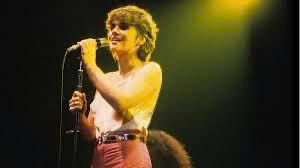
Back in the ‘90s, I had gone on over 100 dates, searching for “the one,” without success. After identifying a limiting belief—“It’s too hard to fall in love”—I decided to reprogram it by listening daily to Linda Ronstadt’s “It’s So Easy to Fall in Love.”
Within two weeks, I had a serious relationship. But it didn’t lead to marriage, and I got discouraged. It wasn’t until later that I realized—the song gave me exactly what its lyrics promised: love came easily, but marriage wasn’t part of the message.
Once I added another song focused on family, I met the woman who would become the mother of my eight children. We built a life together and raised a beautiful family.
These weren’t coincidences. They were lessons.
After the Arctic trip, I knew I had to start creating music that embedded transformation intentionally into the lyrics.
I began writing simple affirmation songs—not just for myself, but for others, too. Songs like:
In each case, the result wasn’t just a coincidence. I could feel it: the song was shaping the experience.

Friends began to experience similar results:
These stories confirmed what I believed: Music with intentional lyrics unlocks the mind in powerful ways.